DGH A Explained: Meaning, Uses, Benefits, and Impact
In today’s fast-moving digital world, many of the systems we rely on every single day operate quietly in the background. We trust hospitals to function smoothly, organizations to communicate clearly, and technology to connect everything without friction. Yet behind that apparent simplicity lies a complex structure of identifiers, codes, and systems that keep everything aligned. One such identifier is dgh a, a term that may seem small at first glance but plays a surprisingly meaningful role in modern operational environments.
At a deeper level, dgh a represents more than a technical label. It reflects how modern institutions organize information, reduce confusion, and maintain clarity as they scale. From healthcare settings to digital infrastructure, this identifier quietly supports efficiency, accuracy, and coordination—often without being noticed by the people who benefit from it most.
Understanding the basics of DGH A
dgh a is fundamentally an alphanumeric identifier designed to bring structure to complex organizational systems. In environments where multiple departments, units, or operational layers exist, having a clear reference system becomes essential rather than optional.
At its core, this identifier helps organizations:
- Categorize departments or functional units
- Maintain consistency across documentation
- Reduce ambiguity in internal communication
The use of letters and characters allows systems to scale without becoming confusing. Instead of relying on long descriptions or informal naming conventions, teams can reference specific units quickly and accurately. This becomes especially important in large institutions where precision directly affects performance.
In many cases, the letter component signifies a specific classification, version, or tier. This subtle distinction enables teams to understand context instantly, even when navigating large datasets or operational frameworks. Over time, such identifiers become embedded into daily workflows, supporting efficiency without requiring constant explanation.
- Also Read Laaster Guide
How DGH A is used in modern systems
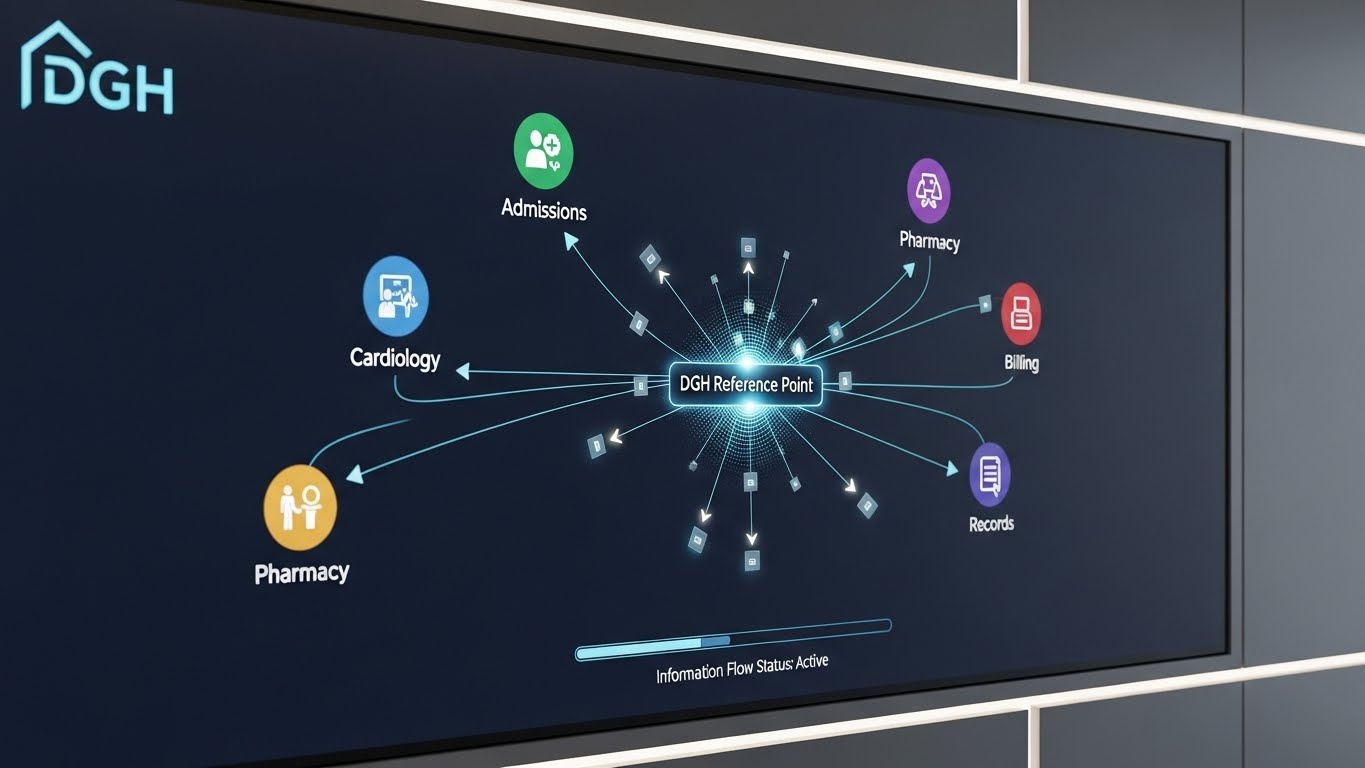
dgh a plays an active role in modern systems by acting as a standardized reference point. In healthcare environments, it often supports administrative organization, clinical coordination, and record management. Clear identifiers ensure that information reaches the correct department without unnecessary delays.
Beyond healthcare, its application extends into:
- Digital growth initiatives
- Innovation hubs and technology programs
- Educational and institutional management systems
In these contexts, structured identifiers simplify collaboration between teams that may not interact directly on a daily basis. When systems grow larger and more interconnected, having a shared reference language becomes essential.
This approach also supports interoperability. When different systems or platforms communicate with one another, standardized identifiers reduce friction and prevent data mismatches. As a result, organizations can operate more smoothly even as they adopt new technologies or expand their operations.
Advantages of using DGH A in technology
dgh a offers practical and long-term advantages for organizations that rely on structured data and efficient workflows. Its biggest strength lies in clarity—making complex systems easier to navigate without oversimplifying them.
Key advantages include:
- Faster internal communication
- Improved data organization
- Reduced operational errors
- Easier onboarding for new staff
From a technological standpoint, structured identifiers allow systems to scale gracefully. As organizations grow, they can add new units or categories without redesigning the entire framework. This flexibility saves both time and resources.
Another important benefit is consistency. When everyone uses the same reference system, misunderstandings decrease significantly. Teams can focus on execution rather than clarification, which ultimately improves productivity and decision-making.
Real-life examples of successful implementation of DGH A
dgh a has demonstrated its value through practical implementation across multiple sectors. In healthcare institutions, structured identifiers have improved coordination between departments, particularly in administrative and operational workflows.
For example:
- Hospitals use identifiers to streamline patient routing and departmental responsibilities
- Digital innovation centers categorize programs and services more efficiently
- Educational institutions organize academic and administrative units more clearly
In each case, the common outcome is improved clarity. When staff members know exactly which unit or system component is being referenced, delays and errors decrease. Over time, this leads to better service delivery and improved organizational confidence.
These examples show that even small structural tools can create significant improvements when applied consistently and thoughtfully.
Potential challenges and limitations of DGH A
dgh a is effective, but it is not immune to challenges. One of the most common issues arises during implementation, particularly in organizations with legacy systems or informal naming conventions.
Potential limitations include:
- Initial resistance from staff
- Training requirements
- Inconsistent adoption across departments
If identifiers are not applied uniformly, they can create confusion rather than clarity. This is why governance and clear documentation are essential. Organizations must establish rules for usage and ensure they are followed consistently.
Another challenge lies in long-term maintenance. As systems evolve, identifiers must be reviewed and updated to remain relevant. Without proper oversight, outdated references can accumulate and reduce system effectiveness.
Future advancements and possibilities for DGH A
dgh a is well positioned to remain relevant as technology continues to evolve. With the increasing adoption of automation, artificial intelligence, and data analytics, structured identifiers will play an even greater role in system efficiency.
Future developments may include:
- Integration with AI-driven decision systems
- Enhanced automation of workflows
- Greater scalability through cloud-based platforms
As organizations rely more heavily on data-driven insights, having clear and consistent identifiers becomes critical. These tools help machines and humans interpret information in the same way, reducing friction between technology and operations.
Looking ahead, identifiers like this may also support cross-organizational collaboration, allowing different institutions to align systems more effectively without sacrificing internal structure.
Conclusion
dgh a may appear simple, but its impact on modern systems is significant. By bringing order to complexity, it allows organizations to operate with confidence even as they grow and evolve.
Its role in healthcare, digital initiatives, and institutional management highlights the importance of structure in a world driven by speed and scale. As technology advances, the demand for clear, reliable identifiers will only increase.
With thoughtful implementation and ongoing refinement, this identifier has the potential to support future systems that value clarity, efficiency, and adaptability—qualities that are essential in today’s interconnected world.
Stay updated with all our recent articles — visit true realty value today.
FAQs
What does dgh a stand for?
dgh a refers to an alphanumeric identifier used to label and organize specific departments, units, or sections within larger systems.
How is dgh a used in healthcare environments?
It helps structure administrative and operational units, improving clarity and coordination within hospital systems.
Is this identifier limited to one industry?
No, it is also applied in digital initiatives, education, and organizational management contexts.
What are common challenges when adopting structured identifiers?
Challenges include training staff, maintaining consistency, and updating systems over time.
Can identifiers like this support future technologies?
Yes, they are highly compatible with automation, AI, and scalable digital platforms.